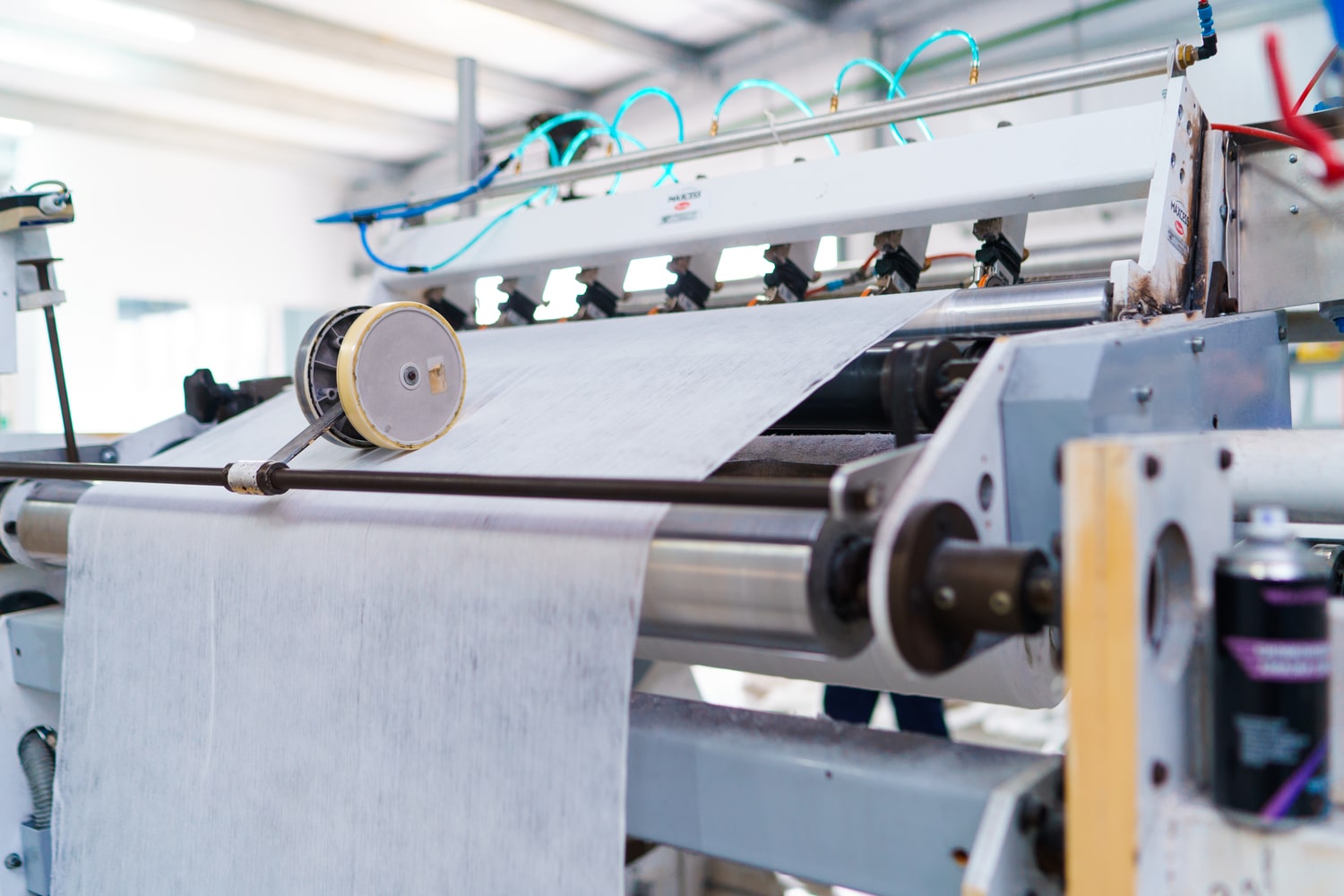
Spunlace (Spunlace) is a modern non-woven material obtained by hydro-jet method of binding the fibers in the canvas. The fabric of the material is fastened on a perforated drum with the help of water jets beating under high pressure from the nozzle beams. Due to these jets, the canvas fibers are connected to each other.
Spunlace production technology appeared in the 1960s, it was the result of hard work done by DuPont and Chicopee, and was first officially introduced by DuPont in 1973 in the form of Sontar°material. In the 1990s, the technology of hydroweaving took a significant step forward and became more accessible to many manufacturers of nonwovens
Polyester Fiber
Polyester fiber is a synthetic fiber formed from the melt of polyethylene terephthalate or its derivatives.
The advantages of polyester fibers are low crease, excellent light and weather resistance, high strength, good resistance to abrasion and to organic solvents.
Viscose
Viscose fiber is an artificial fiber obtained by processing natural cellulose. It is produced in the form of textile and cord threads and staple fibers. Staple fiber is used in the production of Spunlace.
Viscose fiber is soft and hygroscopic, which ensures high hygienic qualities of the material made from it, and, due to the availability of raw materials and reagents used in production, is relatively inexpensive.
Advantages of the technology:
- No mechanical impact on the internal structure of the fiber. The fiber is not damaged
- The technology allows you to use different types of fibers and their lengths
- High web forming speed: 300-600 m / min
- Eco-friendly production process
- According to its principle, the technology is sterile
- Non-woven fabric has a good adsorption capacity and high indicators of tactile comfort for a person, similar in effect to natural cotton
Hygroscopic
High degree of absorbency, high hygroscopicity
Breathable
High breathability. The highest among non-bulk nonwovens
As a natural fabric
Softness and good tactile sensations, close to natural fabrics
Durable
Spunlace is tear-resistant, a relatively thin material, yet very durable
Lint-free
Spunlace has a lint-free web structure. No peeling
Non-toxic
Spunlace is non-toxic, so it is widely used for wet wipes for children from the first days of life.
Antistatic
Antistatic properties make it possible to widely use spunlace products in medicine, auto repair and many other areas
Allergenic
Spunlace is an allergenic material


Personal hygiene
Wet Wipes Manufacturers
Household goods
Manufacturers of Household napkins and towels
Medicine
Manufacturers of Disposable Medical Diapers, disposable clothing, Dressing gowns, Hats, Underwear
Beauty industry
Manufacturers of disposable napkins and clothing for multidisciplinary beauty salons and aesthetic medicine clinics. Manufacturers of nail polish remover wipes, etc.
For cleaning companies
Manufacturers of napkins and towels for professional cleaning.
For service stations
Manufacturers of various napkins and towels for car service stations and detaling workshops.